Author name: digiwebmaster00

Digital Gujarat Scholarship 2026–27: Easy Guide
Education & Scholarships

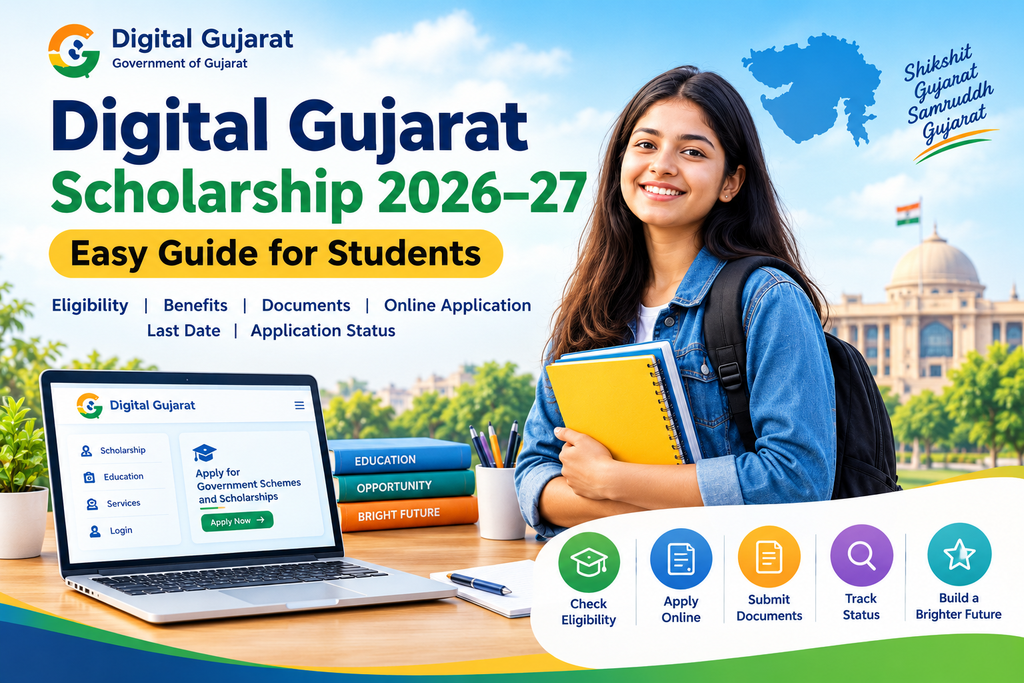
Digital Gujarat Scholarship 2026–27: Easy Guide

Digital Gujarat Scholarship 2026–27 guide: Check eligibility, benefits, required documents, online application steps, last date and status. Education helps students build a better future, but tuition fees, books, accommodation, and other expenses can create financial difficulties for many families. To support eligible students, the Government of Gujarat provides different scholarship schemes for students pursuing school, college, and other recognised courses. The Digital Gujarat Scholarship 2026–27 is a commonly used search term for students looking for Gujarat government scholarships and online application services. Through the Digital Gujarat portal, eligible applicants can access available services and apply for applicable schemes according to their category, educational level, family income, and other conditions. In this guide, you will learn about Digital Gujarat Scholarship eligibility, benefits, required documents, online application steps, important dates, and application status. Official website: https://www.digitalgujarat.gov.in/ What Is Digital Gujarat Scholarship 2026–27? Digital Gujarat is an online government services portal that provides access to various services for Gujarat residents, including scholarship-related services. It helps eligible students find relevant schemes and complete application procedures online when the service is available. Different scholarship programmes may support students from specified communities, income groups, educational levels, or other eligible categories. The benefits and conditions are determined by the individual scheme rather than by one universal scholarship rule. Before applying for the Digital Gujarat Scholarship 2026–27, students should identify the scheme that matches their circumstances and read its official guidelines carefully. Digital Gujarat Scholarship 2026–27: Benefits for Students The benefits of a scholarship depend on the scheme for which a student qualifies. Depending on the applicable rules, assistance may include: Not every student receives the same benefit or scholarship amount. Students should check the official scheme details to confirm the assistance available for their course and category. Digital Gujarat Scholarship 2026–27 Eligibility Criteria Eligibility requirements vary across scholarship programmes. Students should check the official conditions before completing their applications. 1. Gujarat Residence Requirements for Digital Gujarat Scholarship 2026–27 Some schemes require applicants to meet Gujarat residence or domicile conditions. Check whether your selected scheme requires a residence certificate or other accepted proof. 2. Educational Qualification for Digital Gujarat Scholarship Applicants must be enrolled in the class, school, college, or recognised course specified by their selected scholarship scheme. 3. Category Requirements for Digital Gujarat Scholarship Certain schemes are intended for eligible categories, such as Scheduled Caste (SC), Scheduled Tribe (ST), Socially and Educationally Backward Classes (SEBC), or other groups specified in the official guidelines. 4. Family Income Limit for Digital Gujarat Scholarship 2026–27 Some scholarships have a maximum annual family-income limit. The amount differs by scheme, so students should not assume that one income limit applies to all Digital Gujarat scholarships. 5. Academic Requirements for Scholarship Eligibility Certain programmes may specify minimum marks, successful progression to the next academic year, or other educational conditions. 6. Institution Requirements for Digital Gujarat Scholarship The school or college may need to be recognised or approved under the relevant scheme. Institution verification may also be required before an application can be approved. Important: Meeting the general conditions does not guarantee approval. The department evaluates applications according to the particular scholarship’s rules. Documents Required for Digital Gujarat Scholarship 2026–27: Complete Checklist Students should prepare the documents requested by their selected scheme before beginning the online application. Commonly requested documents may include: Additional documents may be required depending on the scholarship and the student’s circumstances. Make sure the information on your certificates matches your application. Upload clear documents in the file format and size specified by the official portal. Students looking for information about other government benefits can also explore our Government Schemes page to learn about eligibility, benefits and application procedures for various schemes. Digital Gujarat Scholarship 2026–27: Online Application Steps Students can follow these general steps to apply for an available scholarship through the Digital Gujarat portal. Step 1: Visit the Official Website Open the official Digital Gujarat website: Always check that you are using the official government website before entering personal information. Step 2: Register or Log In New users should complete the registration process using the details requested by the portal. Existing users can log in with their registered credentials. Follow the current website instructions if the login or registration process has changed. Step 3: Complete Your Profile Enter your personal information, contact details, residential information, and educational details accurately. Review the information before continuing because incorrect details can delay verification. Step 4: Find the Applicable Scholarship Navigate to the relevant scholarship service and identify the scheme for which you may qualify. Check the eligible category, educational level, income requirements, and other conditions before selecting the scheme. Step 5: Select the Academic Year Choose the 2026–27 academic year if it is available for the relevant scholarship. Do not submit an application under an incorrect academic year. Step 6: Fill Out the Application Form Enter the requested details, including your educational information, institution, category, and bank details where applicable. Ensure that all information matches your supporting documents. Step 7: Upload the Required Documents Upload the certificates and documents requested by the application form. Check that the files are readable and meet the portal’s technical requirements. Step 8: Review and Submit Check the completed application carefully. Correct any mistakes before submitting it. Step 9: Save the Acknowledgement After submission, save your application number or acknowledgement receipt. You may need these details to check your application status or contact the relevant department. Digital Gujarat Scholarship 2026–27 Last Date The last date depends on the scholarship scheme, department, student category, and current application schedule. There is no single deadline that applies to every scholarship available through Digital Gujarat. For the correct deadline: Some schemes may have separate dates for student applications, institution verification, corrections, or departmental approval. Important: Do not rely on an old deadline or an unverified social media post. Confirm the current schedule on the official portal before applying. Digital Gujarat Scholarship 2026–27: How to Track Your Application After submitting your application, you should regularly check its progress. Follow these general […]
PM Vishwakarma Yojana 2026
Welfare & Social Security

PM Vishwakarma Yojana 2026: Powerful Benefits & Guide

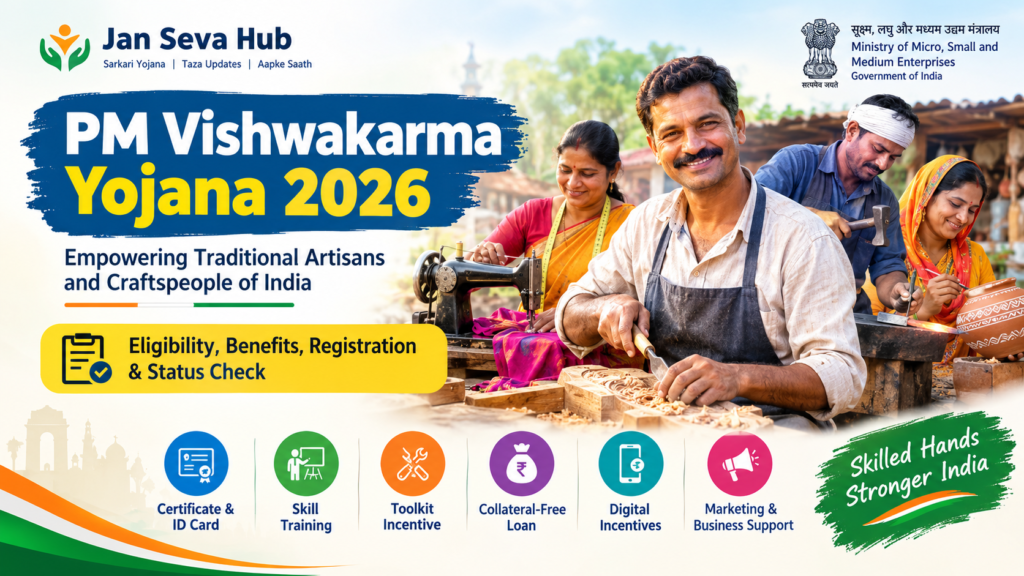
PM Vishwakarma Yojana 2026 guide: check eligibility, 18 eligible trades, toolkit incentive, loan benefits, required documents, CSC registration and application status. The PM Vishwakarma Yojana 2026 is an important Government of India scheme designed to support traditional artisans and craftspeople who work with their hands and tools. The scheme helps eligible workers improve their skills, access modern toolkits, obtain affordable business loans, and promote their products in wider markets. If you are a carpenter, tailor, blacksmith, potter, barber, mason, goldsmith, or another eligible traditional craftsperson, this guide explains the scheme’s benefits, eligibility criteria, required documents, registration process, and application verification. In this article, Jan Seva Hub explains how the scheme works, who can apply, and where to find official information before registering. What Is PM Vishwakarma Yojana 2026? The PM Vishwakarma Yojana 2026 is a Central Sector Scheme launched on 17 September 2023 by the Ministry of Micro, Small and Medium Enterprises (MSME). It supports traditional artisans and craftspeople working in 18 notified trades. The scheme aims to strengthen traditional occupations by providing official recognition, skill development, improved tools, collateral-free credit, digital transaction incentives, and marketing assistance. The scheme is scheduled to run for five years, from FY 2023–24 through FY 2027–28. Applicants should check the official portal for current registration instructions and scheme updates. Official website: https://pmvishwakarma.gov.in/ The scheme’s principal benefits are intended to help artisans improve the quality of their work, develop their businesses, and access new customers. PM Vishwakarma Yojana 2026: Key Benefits The PM Vishwakarma Yojana 2026 offers several forms of support to eligible beneficiaries. Benefits are subject to verification, training requirements, lending rules, and other scheme conditions. 1. PM Vishwakarma Certificate and ID Card Eligible beneficiaries who complete the prescribed registration and verification process receive a certificate and identity card. These provide official recognition as a Vishwakarma artisan under the scheme. 2. Skill Training The scheme provides basic skill training for approximately 5–7 days, or 40 hours. Eligible participants may also undertake advanced training lasting 15 days, or 120 hours. Trainees receive a stipend of ₹500 per training day, subject to applicable scheme rules and attendance requirements. 3. Toolkit Incentive Eligible artisans can receive a toolkit incentive of up to ₹15,000 to help them obtain modern tools relevant to their trade. The incentive is provided under the scheme’s prescribed mechanism and is not an unconditional cash payment to every applicant. 4. Collateral-Free Business Loans One of the major benefits of the PM Vishwakarma Yojana 2026 is access to collateral-free enterprise development credit. The scheme provides two loan tranches: Eligible borrowers receive loans at a concessional interest rate of 5%, subject to scheme conditions and lender approval. The second tranche is conditional on requirements such as repayment of the first loan and adoption of digital transactions or completion of advanced training. Remember that a loan is not a grant. Applicants must meet lending requirements and repay the amount borrowed. 5. Digital Transaction Incentives Eligible beneficiaries may receive an incentive of ₹1 per qualifying digital transaction, up to 100 eligible transactions per month. Applicable transaction and scheme conditions must be satisfied. 6. Marketing and Business Support The scheme also supports artisans through branding, quality certification, exhibitions, trade fairs, publicity, and e-commerce connections. These opportunities can help traditional businesses reach more customers. PM Vishwakarma Yojana 2026 Eligibility Criteria Before applying for the PM Vishwakarma Yojana 2026, applicants should check whether they meet the prescribed conditions. The main eligibility requirements include: There are specific provisions concerning applicants who have repaid loans under schemes such as MUDRA and PM SVANidhi. Therefore, applicants should confirm their individual circumstances against the current official rules rather than assuming automatic disqualification. Meeting the basic conditions does not guarantee approval. Applications undergo the prescribed verification and screening process. Which Trades Are Covered Under PM Vishwakarma Yojana? The scheme covers the following 18 traditional trades: If your occupation falls within one of these categories, check the detailed trade definitions and eligibility conditions on the official portal before proceeding. Documents Required for PM Vishwakarma Yojana 2026 Applicants should prepare the required information before visiting a Common Service Centre (CSC). Commonly required documents and details include: If you do not have a bank account, ask the CSC about the prescribed process for opening one. Other information may be requested during verification, depending on your circumstances. Carry original documents where required and provide accurate information. Important: Never share your Aadhaar OTP, banking PIN, or other confidential authentication details with unauthorised persons. How to Apply for PM Vishwakarma Yojana 2026 Registration is facilitated through authorised Common Service Centres (CSCs). Applicants should follow the official process rather than relying on unofficial registration websites. Step 1: Visit an Authorised CSC Find a nearby CSC and explain that you want to register under the PM Vishwakarma scheme. The operator can help you understand the registration process. Step 2: Complete Aadhaar Verification Your identity must be verified using the prescribed Aadhaar-based process. Follow the authorised operator’s instructions for OTP or biometric verification. Step 3: Provide Your Personal Details Provide accurate personal, family, bank, and occupation information as requested. Confirm that your selected trade matches the work you actually perform. Step 4: Submit the Application The CSC operator will help complete and submit the application through the authorised system. Review the details carefully before submission. Step 5: Save the Application Reference Keep your application or acknowledgement number safely. It can help you follow up on your registration and verification. Step 6: Wait for Verification Applications undergo a three-stage process involving verification at the Gram Panchayat or Urban Local Body level, review by the District Implementation Committee, and final screening and approval. Successful registration and access to individual benefits depend on the applicable scheme conditions and approval process. PM Vishwakarma Yojana 2026 Application Status Check After registration, applicants may want to know whether their application has been approved or requires further verification. To check your status: The exact status-check options may vary. If you cannot find a public tracking facility, contact your CSC or the […]

PM Kisan 2026
Agriculture & Farming

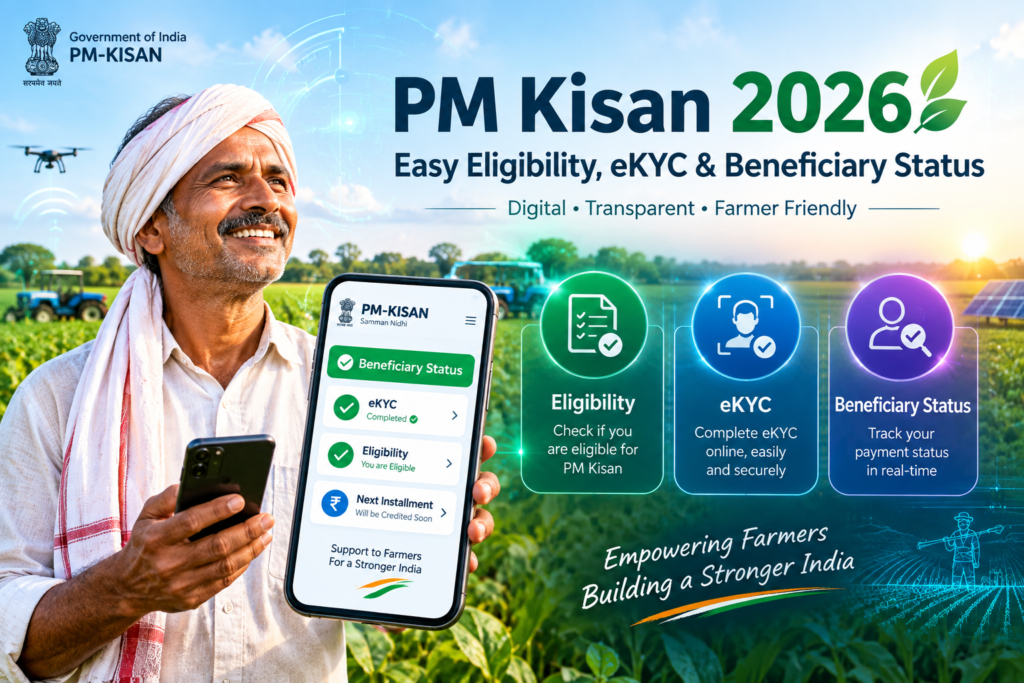
PM Kisan 2026: Easy Eligibility, eKYC & Beneficiary Status

Check PM Kisan 2026 eligibility, eKYC, beneficiary status, list, registration, installment details and payment issues. Get the latest guidance here. The amount is transferred directly to the registered bank account of eligible beneficiaries through the Direct Benefit Transfer (DBT) system. In 2026, farmers can use the official PM-KISAN portal to check their beneficiary status, payment details, eKYC status, registration information and beneficiary list. In this guide, you will learn about PM Kisan 2026 eligibility, benefits, eKYC, beneficiary status, beneficiary list, registration, documents required and common reasons why a payment may be delayed or withheld. For farmers looking for PM Kisan 2026 information, this guide explains eligibility, eKYC, beneficiary status, registration, installments and common payment issues. Important: PM-KISAN is a government scheme. Before submitting personal information, always use the official PM-KISAN website and avoid sharing Aadhaar, OTP or bank details with unknown websites or individuals. What Is PM Kisan Samman Nidhi? Pradhan Mantri Kisan Samman Nidhi, commonly known as PM-KISAN, is a Central Sector Scheme of the Government of India. The scheme became operational on 1 December 2018 with the objective of providing income support to eligible landholding farmer families. Under PM-KISAN, eligible farmer families receive: The scheme defines a farmer family as consisting of husband, wife and minor children, subject to the eligibility and exclusion conditions of the scheme. The identification of eligible beneficiaries is carried out by the concerned State Government or Union Territory administration according to the PM-KISAN guidelines. PM Kisan 2026 Benefits and Payment The main benefit of PM-KISAN is direct financial assistance to eligible farmer families. PM Kisan benefit at a glance Particular Details Scheme name Pradhan Mantri Kisan Samman Nidhi Common name PM Kisan / PM-KISAN Annual benefit ₹6,000 Number of installments 3 per year Amount per installment ₹2,000 Payment method Direct Benefit Transfer Beneficiaries Eligible landholding farmer families Implementing authority Department of Agriculture & Farmers Welfare Government Government of India eKYC Mandatory for registered farmers The financial assistance can help farmers meet some of their agricultural and household expenses. However, receiving the benefit depends on fulfilling the scheme’s eligibility requirements and completing required verification. PM Kisan 2026 Eligibility Before applying for or expecting a PM-KISAN payment, farmers should understand the eligibility rules. PM Kisan 2026 eligibility depends on land records, farmer-family details, verification requirements and the scheme’s exclusion rules. The scheme is intended for eligible landholding farmer families who satisfy the conditions specified under PM-KISAN guidelines. Generally, the farmer family must have cultivable land recorded in the relevant land records and must not fall under any of the specified exclusion categories. Important eligibility points A farmer should generally: It is important to understand that simply being involved in farming does not automatically guarantee PM-KISAN benefits. Eligibility is determined according to the official scheme guidelines and verification process. Who Is Not Eligible for PM Kisan? PM-KISAN has several exclusion categories. The official scheme guidelines exclude certain farmer families and individuals based on their status, occupation, income tax status and other conditions. Examples of excluded categories include: 1. Institutional landholders Institutional landholders are not eligible under the scheme. 2. Constitutional post holders Former and present holders of certain constitutional posts are excluded. 3. Ministers and certain elected representatives Former and present Ministers, State Ministers and certain members of Parliament and State Legislatures fall under the exclusion criteria. Certain former and present Mayors of Municipal Corporations and Chairpersons of District Panchayats are also covered by the exclusion provisions. 4. Certain government employees Serving or retired officers and employees of Central or State Government ministries, departments, offices, field units, public sector enterprises and certain autonomous institutions are excluded, subject to the specific exceptions provided in the guidelines. 5. Pensioners receiving a specified pension Certain retired pensioners receiving a monthly pension of ₹10,000 or more are excluded, subject to the exceptions in the scheme guidelines. 6. Income-tax payers Persons who paid income tax in the last assessment year are among the excluded categories. 7. Certain professionals Professionals such as: who are registered with professional bodies and actively practise their profession are included in the exclusion criteria. Because eligibility rules can depend on the exact circumstances of a farmer and family, applicants should check the official PM-KISAN guidelines rather than relying only on a general eligibility list. PM Kisan eKYC 2026 eKYC is mandatory for PM-KISAN registered farmers. This is one of the most important requirements for receiving PM-KISAN benefits. The government has provided different methods for completing eKYC, including Aadhaar-based verification and options through the PM-KISAN mobile application or authorised service providers. Completing eKYC is an important part of maintaining PM Kisan 2026 beneficiary eligibility and receiving payments without avoidable delays. Why is PM Kisan eKYC important? eKYC helps verify the identity of beneficiaries and supports the government’s process of ensuring that benefits reach eligible farmers. If your eKYC is not completed or your beneficiary information has an issue, your payment may be affected. Therefore, farmers who are already registered under PM-KISAN should check their eKYC status regularly. How to Complete PM Kisan eKYC Online Farmers can use the official PM-KISAN portal or available official digital options for eKYC. The exact screens and verification options may change as the government updates the portal. General process Farmers who face difficulty with online authentication can also use an authorised CSC/service centre where applicable. The PM-KISAN system also supports biometric and face-authentication based eKYC options through authorised channels. PM Kisan 2026 Status Check If you have already registered for PM-KISAN, you can check your status through the official Know Your Status facility. The status page can provide information such as: How to check PM Kisan status Follow these general steps: If you do not know your registration number, use the official options available on the PM-KISAN portal to retrieve or identify your registration details. Farmers can use the official portal to review their PM Kisan 2026 status, payment information and beneficiary details. How to Check PM Kisan Beneficiary List 2026 The PM Kisan 2026 Beneficiary List allows farmers to check whether […]

Niradhar Pension Gujarat 2026
STATE GOVERNMENT SCHEMES

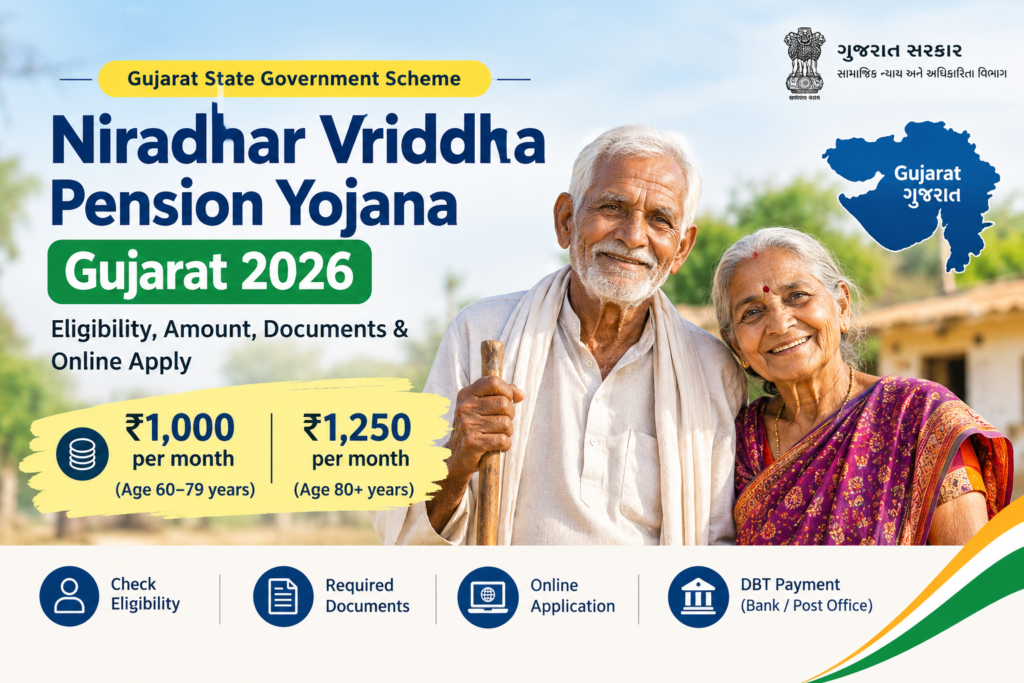
Niradhar Pension Gujarat 2026: Easy Eligibility & Apply

Niradhar Pension Gujarat 2026: Check eligibility, pension amount, income limit, documents and online application process. Under this scheme, eligible beneficiaries aged 60 to 79 years can receive ₹1,000 per month, while beneficiaries aged 80 years or above can receive ₹1,250 per month. The assistance is transferred directly to the beneficiary’s bank or post office account through DBT. In this guide, you will learn about Niradhar Vriddha Pension Yojana eligibility, pension amount, income limit, required documents, application process, payment method and important rules. Niradhar Vriddha Pension Yojana Gujarat 2026 – Overview Particular Details Scheme Name Niradhar Vriddha Pension Yojana State Gujarat Scheme Type State Government Scheme Department Directorate of Social Defense, Gujarat Minimum Age 60 years Monthly Assistance ₹1,000 for 60–79 years Monthly Assistance for 80+ ₹1,250 Payment Method Direct Benefit Transfer (DBT) Bank/Post Office Account Required Application Mode Online/through designated government centres Official Portal Digital Gujarat Implementing Authority Concerned Mamlatdar Office The scheme is officially listed under the Old Age Welfare schemes of the Gujarat Social Defense Department. What is Niradhar Vriddha Pension Yojana? Niradhar Vriddha Pension Yojana Gujarat 2026 is a state government pension assistance scheme for eligible elderly residents of Gujarat. The purpose of the scheme is to provide financial support to elderly people who satisfy the prescribed eligibility conditions. Applicants may qualify through the income-limit category or, where applicable, through the BPL category. The Gujarat Government’s official information states that applicants under the income-limit category must generally be at least 60 years old and must satisfy the residence, income and family-support conditions specified under the scheme. Niradhar Vriddha Pension Yojana Amount 2026 The monthly financial assistance depends on the beneficiary’s age. Pension amount The assistance is paid through DBT (Direct Benefit Transfer) into the beneficiary’s bank account or post office account. For example, a beneficiary aged 65 who is approved under the scheme would receive ₹1,000 per month according to the currently published official scheme information. Niradhar Vriddha Pension Yojana Eligibility 2026 Applicants need to meet the applicable eligibility conditions. 1. Age requirement For the standard income-limit category, the applicant should generally be 60 years of age or above. The official Gujarat Government information also provides a separate provision for certain disabled applicants, where a person with more than 75% disability and age of 45 years or above may qualify subject to the other applicable conditions. 2. Gujarat residence The applicant should have been a permanent resident of Gujarat for at least 10 years under the income-limit eligibility category. 3. Income limit For applicants qualifying through the income-limit category, the annual income should not exceed: These are the income limits currently published on the Gujarat Social Defense Department’s official scheme page. 4. Family support condition The official eligibility rules include conditions relating to whether the applicant has a son or grandson aged 21 years or above. There are exceptions where such a family member is mentally unstable, has a disability that prevents earning, or is suffering from a serious illness such as cancer or tuberculosis, subject to the scheme’s applicable conditions. 5. BPL applicants People aged 60 years or above who fall under the applicable BPL criteria may also qualify. For rural applicants, the official information refers to inclusion in the BPL list with a 0–20 score. Urban applicants must satisfy the applicable BPL-list condition specified by the government. Niradhar Pension Gujarat 2026: Documents Required Applicants should keep the required documents ready before submitting the application. Documents for income-limit applicants Commonly required documents include: The exact documents required can depend on the applicant’s category and circumstances. The official Gujarat Government scheme page should be checked before submitting the application. Documents for BPL applicants BPL applicants may need: For rural applicants, the government specifies the applicable BPL 0–20 score condition. How to Apply for Niradhar Vriddha Pension Yojana Gujarat 2026 Eligible applicants can apply through the government-designated channels. Online application The official Gujarat Government information states that applications can be made through: The official scheme page provides Digital Gujarat as the online application portal. Step-by-step application process Step 1: Visit the Digital Gujarat portal or contact the nearest Jan Seva Kendra. Step 2: Select the applicable social security/welfare service for the elderly pension scheme. Step 3: Enter the applicant’s personal information. Step 4: Provide age, residence, income and other required details. Step 5: Upload or submit the required documents. Step 6: Review all information carefully before submitting the application. Step 7: Submit the application and keep the acknowledgement/application details safely. Step 8: The application is processed by the concerned authority. The official information states that the Mamlatdar has the authority to approve or reject applications. Where Can You Apply for Niradhar Pension? According to the Gujarat Government’s official scheme information, an applicant can apply through the following channels: Application forms can also be obtained free of cost from the District Collector’s Office or Mamlatdar Office, and village-level online applications can be facilitated through the Gram Panchayat/VCE. How is Niradhar Pension Paid? The approved assistance is paid through Direct Benefit Transfer (DBT). The amount is transferred directly to the beneficiary’s bank account or post office account. Therefore, applicants should provide valid account details during the application process. What Happens If the Application Is Rejected? If an application is rejected, the official Gujarat scheme information provides a provision to submit an appeal to the Prant Officer within 60 days of rejection. Applicants should keep their application acknowledgement and rejection-related documents safely if they need to appeal. When Can the Pension Assistance Stop? The assistance may need to be stopped when the beneficiary no longer satisfies the applicable conditions. According to the official scheme information, this can include situations such as: In such circumstances, the beneficiary or family should inform the concerned Mamlatdar Office as required. Important Points Before Applying Before applying for Niradhar Vriddha Pension Yojana Gujarat 2026, applicants should check: Frequently Asked Questions What is Niradhar Vriddha Pension Yojana Gujarat? It is a Gujarat State Government social security scheme that provides monthly financial assistance to eligible elderly beneficiaries […]

Sukanya Samriddhi Yojana
CENTRAL GOVERNMENT SCHEMES

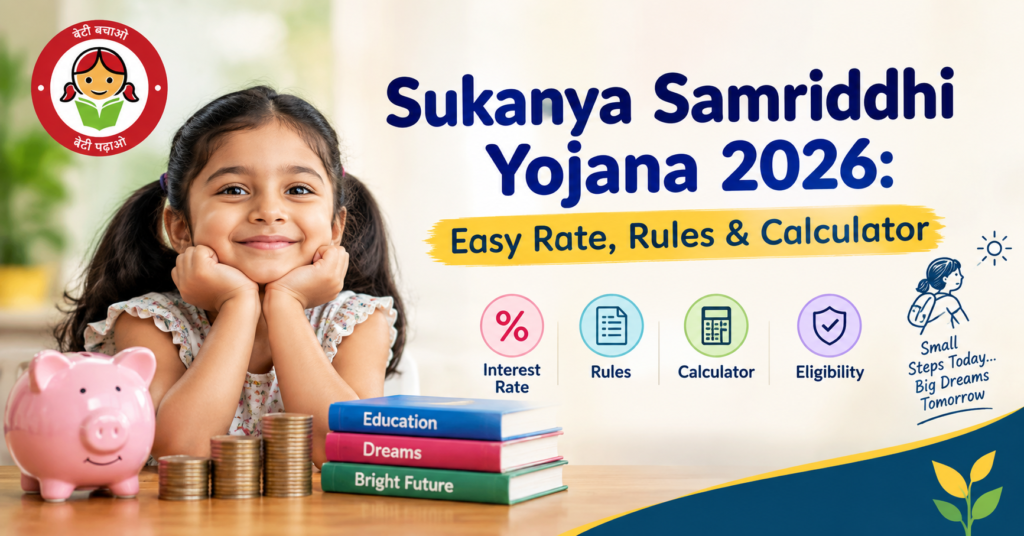
Sukanya Samriddhi Yojana 2026: Easy Rate, Rules & Calculator

Check Sukanya Samriddhi Yojana 2026 interest rate, eligibility, deposit limits, calculator, withdrawal rules, tax benefits and maturity details. For many families, the difficult part is not opening the account. It is understanding how Sukanya Samriddhi interest is calculated, how much can be deposited, when withdrawals are allowed, how the 21-year maturity period works, and what happens if a yearly deposit is missed. As of the July–September 2026 quarter, the Sukanya Samriddhi Account interest rate is 8.2% per annum. The rate is notified by the Government for small-savings schemes and can change from quarter to quarter. This guide explains the Sukanya Samriddhi Yojana interest rate, SSY calculator method, eligibility, deposit limits, withdrawal rules, maturity, tax treatment, account-opening requirements and important mistakes to avoid. Understanding the Sukanya Samriddhi Yojana rules is important before deciding how much to contribute. The scheme has specific conditions for eligibility, deposits, interest calculation, withdrawals and maturity, so parents should understand these rules before opening an account. Sukanya Samriddhi Yojana: Key Details at a Glance Feature Details Scheme name Sukanya Samriddhi Account / Sukanya Samriddhi Yojana Current interest rate 8.2% p.a. for July–September 2026 Intended beneficiary Eligible girl child Maximum age for opening Before the girl turns 10 Minimum annual deposit ₹250 Maximum annual deposit ₹1,50,000 Deposit period Up to 15 years from account opening Maturity 21 years from account opening Higher-education withdrawal Up to 50%, subject to rules Tax deduction Eligible under Section 80C, subject to applicable tax rules Monthly deposit compulsory? No Government-backed scheme Yes The eligibility, deposit limits, maturity period and withdrawal framework are prescribed under the Sukanya Samriddhi rules and India Post’s scheme information. What Is Sukanya Samriddhi Yojana? Sukanya Samriddhi Yojana is a long-term savings scheme for a girl child. It was introduced as part of the government’s broader effort to encourage savings for girls and support their future financial requirements. The account can be opened by a natural or legal guardian for an eligible girl child. The rules provide that the girl must be below 10 years of age when the account is opened. Generally, one account is permitted for each girl child, with the scheme allowing accounts for up to two girl children in a family, subject to specific exceptions provided under the rules. Unlike an ordinary savings account, SSY is designed around a long investment horizon. Contributions can be made for the first 15 years, while the account itself matures after 21 years from the date it was opened. What Is the Sukanya Samriddhi Interest Rate in 2026? The Sukanya Samriddhi interest rate is 8.2% per annum for the July–September 2026 quarter. The Government reviews small-savings interest rates periodically. The Department of Economic Affairs’ June 30, 2026 notification kept the rates unchanged for the second quarter of FY 2026–27. This is important because you should not assume that 8.2% will remain the rate for the entire 21-year period. The rate applicable to SSY can be revised by the Government. Therefore, online calculations that use 8.2% for every future year should be treated as illustrations rather than guaranteed maturity estimates. Current SSY interest rate 8.2% per annum Applicable period: July 1, 2026 to September 30, 2026. The Sukanya Samriddhi Yojana interest rate is reviewed periodically by the Government. Therefore, the rate applicable today should not be assumed to remain unchanged throughout the account’s full maturity period. How Is Sukanya Samriddhi Interest Calculated? This is one of the most important things to understand before using an SSY calculator. The scheme rules state that interest is compounded annually. The interest for a calendar month is calculated using the lowest balance in the account between the close of the 10th day and the end of that month. The interest is credited to the account at the end of the financial year. Why does the deposit date matter? Suppose you are planning to deposit money into your daughter’s SSY account. If the money is deposited early enough in the month, it can be considered for the applicable monthly interest calculation. A deposit made after the relevant date may not receive the same month’s interest calculation. For this reason, people often prefer making their annual or monthly contribution before the 10th of the month rather than leaving it until later. The exact calculation follows the scheme rules, not a simple fixed-interest formula. Sukanya Samriddhi Calculator: How to Calculate Maturity Amount A Sukanya Samriddhi calculator generally requires information such as: However, there is an important limitation. Monthly Deposit Annual Deposit Total Deposits for 15 Years ₹1,000 ₹12,000 ₹1,80,000 ₹2,500 ₹30,000 ₹4,50,000 ₹5,000 ₹60,000 ₹9,00,000 ₹10,000 ₹1,20,000 ₹18,00,000 ₹12,500 ₹1,50,000 ₹22,50,000 Important: Contribution Amount vs Maturity Amount The table above shows the total amount deposited over 15 years, not the final maturity amount. For example, if you deposit ₹5,000 every month: ₹5,000 × 12 months = ₹60,000 per year ₹60,000 × 15 years = ₹9,00,000 total contribution The final maturity value can be higher because interest is credited to the account according to the applicable Sukanya Samriddhi rules. However, the future interest rate can change, so a calculator using today’s 8.2% rate for all future years should be treated only as an illustration. However, there is an important limitation: an SSY calculator cannot guarantee the final maturity amount because the interest rate may change during the account’s 21-year maturity period. If a calculator assumes that the current 8.2% interest rate remains unchanged for the entire investment period, the result should be treated as an illustrative estimate, not a guaranteed maturity amount. For better planning, separate these two figures: What Information Does an SSY Calculator Need? An SSY calculator generally uses the following information: The calculator then estimates the possible value of the account based on the assumptions entered. SSY Contribution Example Suppose you deposit ₹5,000 per month for 15 years: ₹5,000 × 12 × 15 = ₹9,00,000 So, your total contribution over 15 years would be ₹9 lakh. The account can then continue until the 21-year maturity period from the date of opening, with interest credited according […]

Jan Seva Hub

Helping citizens access government schemes and benefits with the latest information.

An independent information website, not affiliated with any government department.

© 2026 Jan Seva Hub. All Rights Reserved.Privacy Policy | Disclaimer | Terms & Conditions
Scroll to Top